Stablecoin Insider Report
The 2025 Stablecoin Year-End Report: Redefining Global Adoption
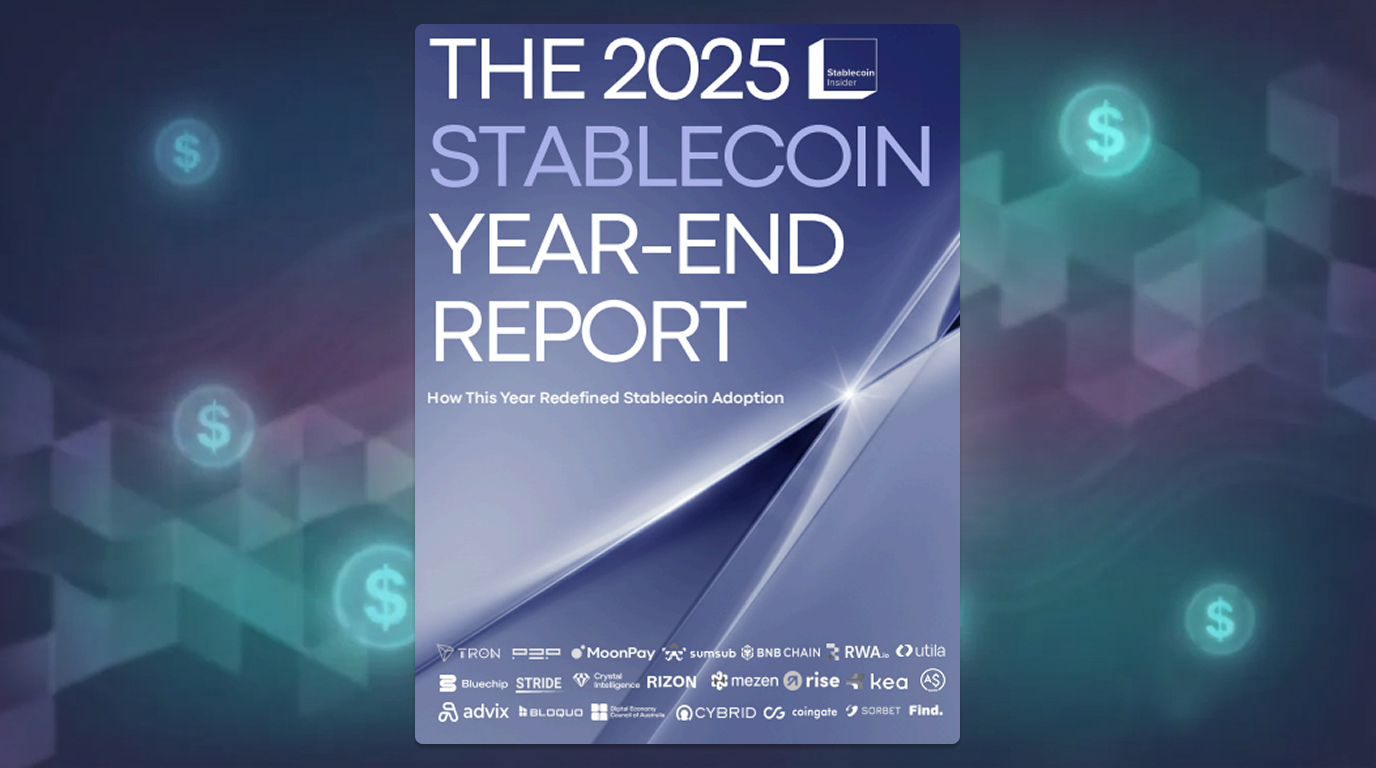
The year 2025 marked a historic inflection point for digital finance, as stablecoins transitioned from a niche crypto narrative into production-grade financial infrastructure. According to the 2025 Stablecoin Year-End Report by Stablecoin Insider, on-chain settlement volumes exceeded several trillions of dollars, signaling a decisive shift toward real economic activity like global payroll, cross-border B2B payments, and treasury management.
A critical theme of the report is the increasing convergence between traditional banking and blockchain technology. On page 39, the report highlights the essential role of STRIDE, an institutional platform designed to make stablecoins operationally viable for banks. STRIDE addresses traditional banking hurdles (such as multi-chain wallet complexity and fragmented issuer relationships) by providing a single integration for custody, compliance screening, and automated clearing.
As Alexander Feenie, Founder and CEO of STRIDE, notes in the report, stablecoins are not "killing" banks but are instead pushing them to evolve by enabling faster, 24/7 settlement and lower-cost cross-border payments. This infrastructure allows institutions to process stablecoins in a manner similar to familiar payment instruments like IBAN transfers, effectively making digital assets "bankable."
Key Takeaways
- Infrastructure Maturation: Stablecoins are now being absorbed into the global financial system as a programmable settlement layer rather than evolving in parallel to it.
- Regulatory Execution: Landmark frameworks like the U.S. GENIUS Act and Europe's MiCA have provided the institutional clarity needed for widespread adoption.
- Institutional Adoption: Major banks, including JPMorgan Chase and Société Générale, have moved beyond experimentation to deploy stablecoins for near-instant settlement and intraday liquidity management.
- Network Dominance: The TRON network remains a leader in global USDT supply (43.2%) and retail transfers, while the BNB Chain and Ethereum continue to serve as high-volume settlement hubs.
- Bridging the Gap: Platforms like STRIDE are enabling banks to adopt stablecoin rails without requiring intensive in-house blockchain expertise.
Why It Matters
- Operational Efficiency: Stablecoins solve real-world payment frictions, offering settlements that are up to 94% cheaper and significantly faster than traditional correspondent banking.
- Financial Inclusion: In emerging markets across Africa, Latin America, and Asia, stablecoins provide a critical hedge against inflation and a more reliable rail for remittances.
- Trust and Compliance: The shift toward regulated reserve custody and monthly public disclosures is replacing speculative usage with production-grade reliability.
- The Future of Money: As we move into 2026, the ecosystem is shifting its focus from raw transaction speed to robust governance, interoperability, and deep integration into everyday financial operations.