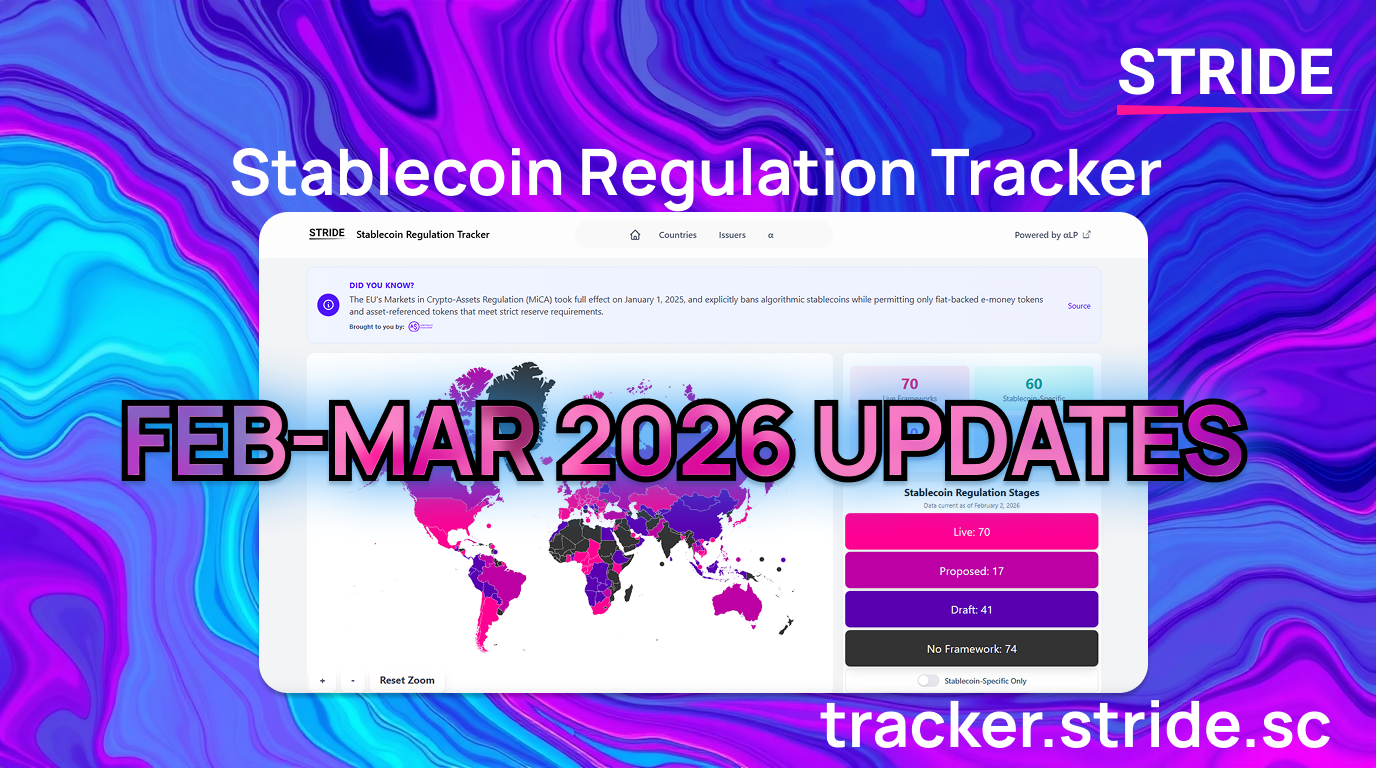
What We Built in February and March: The Stablecoin Regulation Tracker Evolution
A round-up of every major update to the Stablecoin Regulation Tracker over the past two months.
The Stablecoin Regulation Tracker launched with a simple premise: regulation is moving faster than most teams can follow, and there should be a single place to track it all. Over the past two months, we have been putting that idea to work.
Here is what changed.
A New Interface
The tracker got a full UI refresh. Navigation is faster, pages are cleaner, and the overall experience is built for the kind of quick, comparative research that compliance teams and policy analysts actually do. If you visited the tracker before February, it looks and feels like a different product now.
Two New Sections
Currencies. You can now browse stablecoins by their reference currency. Whether you are looking at USD-pegged tokens, EUR-denominated stablecoins, or commodity-backed instruments, the new Currency section groups everything in one view.
Blockchains. A dedicated Blockchains section shows stablecoin deployment by chain, with data points on each network. Some stablecoin pages currently display the top five blockchains by issuance, with more chains being added on an ongoing basis.
Alongside the Blockchains section, we shipped a chain comparison tool that lets you compare networks side-by-side. Pick two or more chains and see how they differ across key data points in a single view.
Expanded Coverage
The core of the tracker is its data, and that grew significantly over this period. Across February and March we added:
- New stablecoin issuers and their associated tokens
- Issuer licenses and regulatory approvals
- New laws and regulatory frameworks
- Updated regulation stages across country pages
- Regulatory timelines showing how frameworks have evolved
- New blockchain networks The regulation classification system was also updated. The "No Framework" category now distinguishes between jurisdictions with no stablecoin-specific regulation and those that have actively banned stablecoins. That distinction matters for anyone conducting cross-border compliance assessments.
Deeper Regulatory Detail
Two additions here are worth highlighting.
First, issuer-specific laws now cover entity types, reserve requirements, and redemption guidelines. This goes beyond tracking whether a jurisdiction regulates stablecoins and into how it regulates them, at the issuer level.
Second, licensing laws now surface directly in country comparisons. If you are comparing regulatory environments across jurisdictions, you can see the licensing requirements without leaving the comparison view.
Better Navigation
We added links connecting countries with their licensed issuers, and vice versa. If you are on a country page, you can click through to every issuer licensed in that jurisdiction. If you are on an issuer page, you can see every country where they hold a licence. It sounds simple, but it removes a lot of manual cross-referencing.
Community Corrections
Several improvements came directly from community feedback: typo fixes, data corrections, and suggestions that shaped how we structured new sections. The tracker is better because people told us what needed fixing. That feedback loop is something we want to keep.
7,000 Visits
The tracker crossed 5,000 visits in mid-February and passed 7,000 by the end of March. For a free, niche tool tracking stablecoin regulation across dozens of jurisdictions, that kind of traction tells us the problem is real and the data is useful.
Thank you to everyone who has visited, shared, and sent feedback.
What Comes Next
More issuers, more stablecoins, more jurisdictions, and more features. We update the tracker weekly and publish changelogs so you can follow along.
Explore it yourself at tracker.stride.sc.
Quick preview of the changes here!